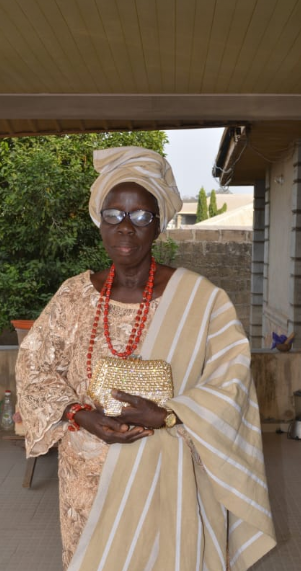
Yoruba cultural traditions span centuries — masquerades, festivals, and ceremonies reflect deep heritage rooted in Ile-Ife
The Yoruba people are one of the largest ethnolinguistic groups in West Africa, numbering over 45 million people
primarily concentrated in South Western Nigeria. With deep historical roots stretching back over a thousand years,
complex social institutions, and vibrant cultural expressions, Yoruba identity is shaped through language,
shared values, town histories, arts, festivals, and community life.
Yoruba history is often discussed through interlinked themes: origin traditions centered around Ile‑Ife
(regarded as the spiritual cradle of the Yoruba), the growth of powerful kingdoms and city-states, trade and
cultural exchange across West Africa, and migration to every corner of the globe. Across generations, Yoruba
communities have contributed immeasurably to literature, music, visual arts, craftsmanship, entrepreneurship,
philosophy, and public governance.
Today, Yoruba people live across Nigeria (especially in Lagos, Ogun, Oyo, Osun, Ondo, Ekiti, and parts of
Kwara, Kogi, Edo, and Delta states) and in thriving diaspora communities worldwide. Yoruba unions and associations
abroad support welfare, mentorship, cultural continuity, and positive representation — including YPU Thailand.
Timeline of Yoruba History
A journey through key periods in the history of the Yoruba people, from ancient origins to the present day.
The Yoruba story spans millennia — from the founding of Ile-Ife to a global diaspora
Before 1000 AD
Ancient Origins — Ile-Ife, Cradle of Civilization
According to Yoruba oral tradition, Oduduwa descended from the heavens at Ile-Ife and
became the progenitor of the Yoruba people. Ile-Ife (in present-day Osun State) is revered as the
spiritual and ancestral homeland of all Yoruba. Archaeological evidence confirms that Ife was a
major urban center as early as the 9th century AD, with sophisticated art, terracotta sculptures,
and organized governance.
The Yoruba creation narrative holds that Olodumare (the Supreme Being) sent Oduduwa to create
the earth itself. From Ile-Ife, Oduduwa's descendants spread out to found the various Yoruba
kingdoms, with each ruling house tracing its lineage back to the sacred city. This shared origin
story unifies Yoruba identity across diverse sub-groups and dialects.
1000 — 1500 AD
Classical Period — Kingdoms, Art, and the Ife Bronzes
Between the 11th and 15th centuries, Ile-Ife reached its artistic and cultural peak. The
Ife bronze and terracotta heads — among the most naturalistic sculptures
ever produced in pre-modern Africa — demonstrate extraordinary metallurgical skill and artistic
vision. These works astonished European scholars when first encountered and remain treasures
of world art.
During this period, the Oyo Empire began its rise as a military and political
power in the savanna region north of the forests. The kingdom of Benin, though Edo-speaking,
maintained deep cultural and dynastic ties to Ile-Ife, with Benin tradition crediting Oduduwa's
lineage for its own royal house. Trade networks expanded, linking Yoruba city-states to
trans-Saharan commerce and coastal exchange.
1500 — 1800
Pre-Colonial Era — The Oyo Empire at Its Peak
The Oyo Empire became the most politically powerful Yoruba state, dominating
a vast territory from its capital at Old Oyo (Oyo-Ile). Under rulers such as Alaafin Abiodun,
Oyo's cavalry-based military controlled trade routes stretching from the Niger River to the
Atlantic coast. The empire's system of governance — with the Alaafin (king), the Oyo Mesi
(council of chiefs), and the Bashorun (prime minister) — represented a sophisticated balance
of power.
Other Yoruba kingdoms flourished independently: Ijebu controlled coastal trade,
Ekiti maintained highland autonomy, and Owo and Ondo
served as cultural bridges. Yoruba towns were characterized by walled compounds, bustling markets,
craft guilds, and complex chieftaincy systems. The trans-Atlantic slave trade, however, began to
destabilize the region, with devastating consequences for Yoruba communities.
1800 — 1900
19th Century — Wars, Transformation, and Resilience
The collapse of the Oyo Empire in the 1830s triggered the Yoruba Wars — a series
of devastating inter-city conflicts that lasted decades. Ibadan rose as a military republic,
Ijaye was destroyed, and Abeokuta was founded as a refuge by Egba migrants under Sodeke's
leadership around 1830. These wars reshaped the political landscape of Yorubaland entirely.
Christian missionaries (particularly the Church Missionary Society) arrived in
Abeokuta in the 1840s, establishing schools, printing presses, and churches. Samuel Ajayi
Crowther, a formerly enslaved Yoruba man, became the first African Anglican bishop in 1864
and translated the Bible into Yoruba. His work standardizing written Yoruba had lasting cultural
impact. By the century's end, British colonial forces imposed treaties and military control,
culminating in the formal colonization of Yorubaland.
1900 — 1960
Colonial Era — Education, Politics, and the Road to Independence
Under British colonial rule, Yoruba society underwent profound transformation. Western education
spread rapidly through missionary schools, producing a generation of educated professionals,
lawyers, doctors, teachers, and journalists. Cities like Lagos and Ibadan became centers of
intellectual and political activity. The Yoruba embraced education as a path to advancement,
a value that persists strongly today.
Chief Obafemi Awolowo emerged as the foremost Yoruba political leader, founding
the Action Group party and serving as Premier of the Western Region. His policies of free
primary education, industrialization, and infrastructure development transformed Western Nigeria
into the most developed region in the country. Awolowo's legacy as a champion of federalism,
education, and good governance remains central to Yoruba political identity. Other notable figures
include Chief S.L. Akintola, Chief Ladoke Akintola, and
Ernest Ikoli.
1960 — Present
Post-Independence — Contributions and Global Diaspora
Since Nigeria's independence in 1960, Yoruba people have played central roles in the nation's
political, economic, cultural, and intellectual life. Yoruba leaders have served as heads of state,
including Chief Olusegun Obasanjo and Chief Ernest Shonekan.
Nobel laureate Wole Soyinka (1986) became the first African to win the Nobel
Prize in Literature. Yoruba academics, artists, musicians, entrepreneurs, and professionals
continue to shape Nigeria and the world.
The Yoruba diaspora has grown significantly, with communities thriving across the United Kingdom,
United States, Canada, Brazil, the Caribbean, and Southeast Asia (including Thailand). Diaspora
organizations like YPU Thailand maintain cultural continuity, provide welfare
support, and foster positive representation. Meanwhile, Yoruba cultural exports — from
Afrobeats music to Nollywood cinema to fashion — have achieved unprecedented global reach.
Religion and Belief Systems
Yoruba spiritual and religious life is deeply interwoven with culture, art, and daily practice
Traditional Yoruba Religion (Isese)
The traditional Yoruba religious system, known as Isese, is one of the most sophisticated
indigenous belief systems in Africa. At its apex is Olodumare (also called Olorun) — the
Supreme Creator deity who is omnipotent, omniscient, and transcendent. Olodumare is not worshipped directly
but is approached through intermediary spiritual forces known as Orisas (deities).
The principal Orisas include:
Obatala — Orisa of creation, purity, and wisdom; regarded as the sculptor of human bodies.
Ogun — Orisa of iron, war, and technology; patron of blacksmiths, hunters, and modern workers.
Sango (Shango) — Orisa of thunder and lightning; a deified Alaafin of Oyo known for justice and power.
Osun — Orisa of the river, fertility, beauty, and love; her sacred grove in Osogbo is a UNESCO World Heritage Site.
Yemoja — Orisa of the seas and motherhood; protector of women and children.
Esu (Eshu) — The divine messenger and trickster who mediates between humans and Orisas; guardian of crossroads and choices.
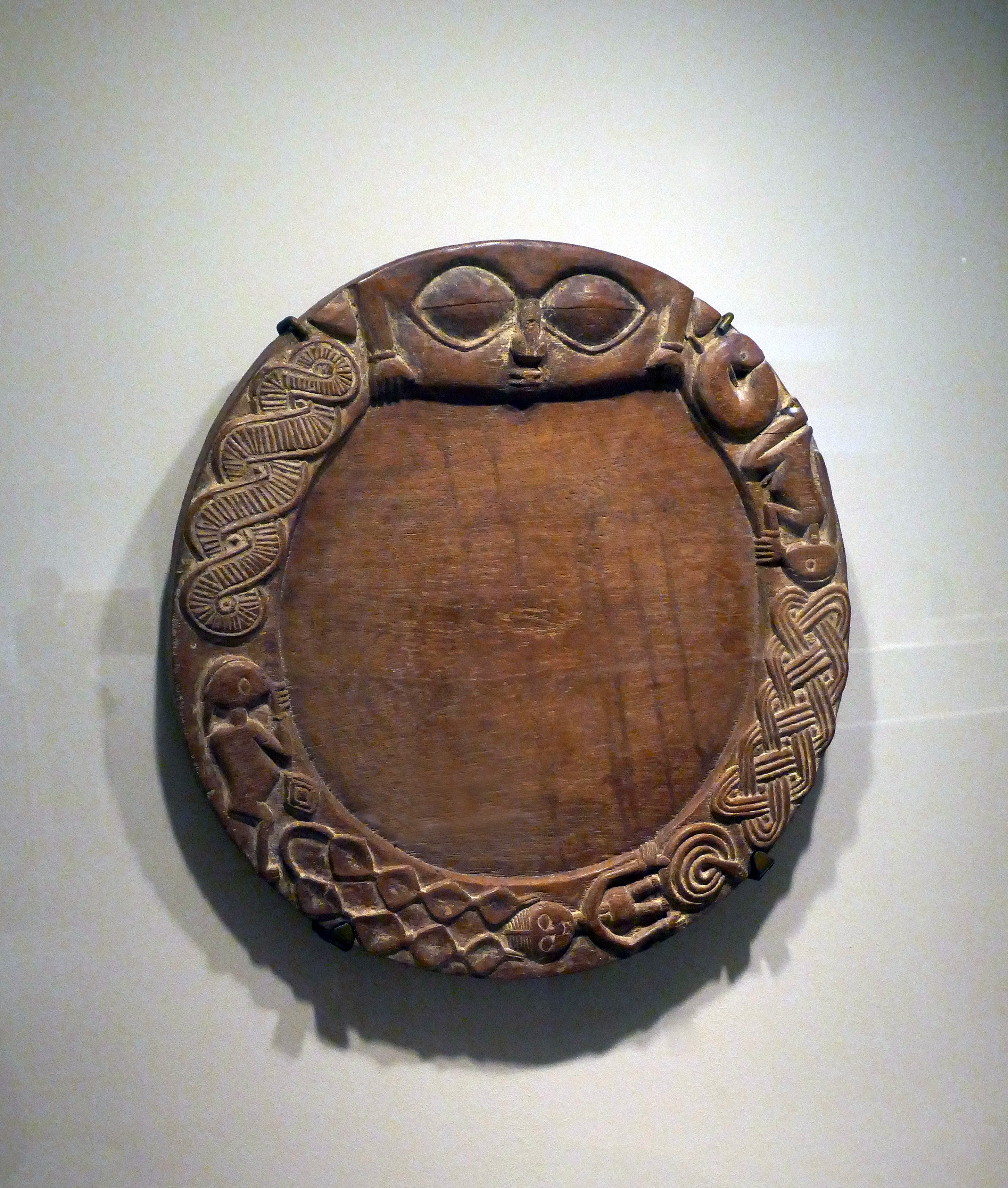
Ifa — The system of divination presided over by Orunmila, the Orisa of wisdom and destiny. Ifa's 256 Odu (sacred verses) constitute an oral literary corpus recognized by UNESCO as Intangible Cultural Heritage of Humanity.
Christianity Among the Yoruba
Christianity arrived in Yorubaland through the Church Missionary Society (CMS) in the 1840s,
initially among formerly enslaved Yoruba returnees from Sierra Leone (known as Saros or Akus). The most
celebrated convert was Samuel Ajayi Crowther (c. 1809-1891), who was captured as a boy,
freed by the Royal Navy, educated in Sierra Leone, and eventually consecrated as the first African Anglican
bishop. Crowther translated the Bible into Yoruba, created a Yoruba grammar, and established churches and
schools across the Niger region.
Today, Christianity — including Anglican, Catholic, Baptist, Methodist, and numerous Pentecostal denominations —
is widely practiced among Yoruba people, particularly in Ekiti, Ondo, Ogun, and parts of Lagos and Oyo states.
The Yoruba have produced many influential Christian leaders, theologians, and institutions.
Islam Among the Yoruba
Islam reached Yorubaland through trade routes and Hausa/Fulani contact, becoming established as early as the
18th century. The city of Ilorin — originally a Yoruba town in the Oyo Empire — became a
major center of Islam after its emir, Afonja, allied with Fulani jihadists in the early 19th century. Today,
Ilorin remains one of the most important Islamic cities in southern Nigeria.
Islam is also widely practiced in Lagos (especially among the Awori and other sub-groups), Ibadan, Iwo,
Ede, Offa, and many other Yoruba towns. Yoruba Muslims have developed distinctive practices that blend
Islamic observance with Yoruba cultural traditions, including naming ceremonies (isomoloruko) and marriage
customs.
Syncretic Practices and Diaspora Influence
Yoruba spiritual traditions crossed the Atlantic and influenced religions throughout the Americas
One of the most remarkable aspects of Yoruba spirituality is its survival and transformation in the
Americas through the transatlantic slave trade. Enslaved Yoruba people carried their religious knowledge
to the New World, where it evolved into several major syncretic religions:
Santeria (Regla de Ocha) — Practiced in Cuba and Cuban diaspora communities; Orisas are syncretized with Catholic saints.
Candomble — Practiced in Brazil, particularly Bahia; preserves Yoruba language, music, and ritual in remarkable detail.
Vodun — Practiced in Haiti and West Africa (Benin Republic, Togo); incorporates Yoruba and Fon spiritual elements.
Trinidad Orisha — Practiced in Trinidad and Tobago; blends Yoruba spirituality with other Caribbean traditions.
Today, there is a growing global revival of traditional Yoruba religion (Isese), with practitioners in
Nigeria, the Americas, and Europe. This movement emphasizes returning to indigenous Yoruba spiritual
practices free from syncretic additions.
Key Festivals
Yoruba festivals celebrate Orisas, ancestors, and community identity. Major festivals include:
Osun-Osogbo Festival — An annual celebration at the sacred Osun Grove in Osogbo (UNESCO World Heritage Site), drawing tens of thousands of devotees and tourists. The festival honors the river goddess Osun with processions, prayers, and the lighting of the 16-point Osun lamp.
Olojo Festival — Celebrated in Ile-Ife, this ancient festival honors Ogun and commemorates the creation of the world. The Ooni of Ife wears the sacred Are crown, said to have been worn by Oduduwa himself.
Eyo Festival — Held in Lagos, featuring white-robed masqueraders (Eyo) representing ancestral spirits parading through the city. It is one of the most visually striking festivals in Nigeria.
Oro Festival — A nocturnal ritual associated with male ancestral spirits, observed in many Yoruba towns; women are traditionally excluded from the streets during Oro.
Sango Festival — Celebrated in Oyo and other towns, honoring the thunder deity Sango with drumming, dancing, and fire displays.
Language and Identity
Yoruba language — with its rich dialects — is a cornerstone of identity passed through generations
The Yoruba language belongs to the Niger-Congo family and is spoken by over 45 million people. It is a
tonal language with three basic tones (high, mid, low) and features a rich vocabulary for philosophy,
nature, and social relations. Yoruba has numerous dialects reflecting town histories and regional contacts,
including Ijebu, Ekiti, Oyo, Igbomina, Ondo, Ijesa, Egba, Awori, and many others.
Dialect diversity: local speech varieties reflect town histories and contact with neighbors.
Shared values: Omoluabi — the Yoruba concept of a person of good character, embodying respect, honesty, hard work, and communal responsibility.
Cultural transmission: storytelling (alo apagbe), proverbs (owe), praise poetry (oriki), and festivals.
Written tradition: standardized by Bishop Crowther and subsequent scholars; a growing body of modern Yoruba literature.
Migration and Diaspora
Yoruba communities thrive worldwide through professional networks, cultural associations, and family ties
Yoruba migration has occurred in multiple waves: the forced displacement of the slave trade; voluntary
migration within West Africa for trade; colonial-era movement for education and employment; and
post-independence emigration to Europe, North America, and Asia. Today, significant Yoruba communities
exist in the UK, USA, Canada, Brazil, Cuba, and across Southeast Asia.
Yoruba values of respect, community, excellence, and hospitality shape daily life and traditions
Omoluabi: the ideal of a well-rounded, morally upright person — the highest aspiration in Yoruba culture.
Respect (Iwa): honoring elders, greeting properly, and upholding community standards.
Community (Ajumose): mutual support, shared responsibility, and collective problem-solving.
Excellence (Ise): hard work, skill, education, and achievement as markers of character.
Hospitality (Iteriba): welcoming others, sharing food, and building relationships across boundaries.
Why This Matters in Thailand
Yoruba people abroad create opportunities for cultural exchange and community development
Living abroad creates opportunities for cultural exchange and community development.
Yoruba Progressive Union in Thailand helps members stay connected to heritage while building
positive relationships in Thailand. Understanding our deep history strengthens our identity and
guides our actions as ambassadors of Yoruba culture.
Community support: welfare, guidance, and mentorship for members.
Positive representation: responsible conduct and cultural understanding.
Connection: events that keep language and heritage active for families and youth.
Legacy: passing on the values of Omoluabi to the next generation, wherever they are.
Explore Yoruba States and Yoruba-Speaking Areas
Use the sub-pages below to learn about culture, food, and historical links across Yoruba South‑West states,
plus Yoruba-speaking areas in Kwara, Kogi, Delta, and Edo, and Yoruba migration worldwide.